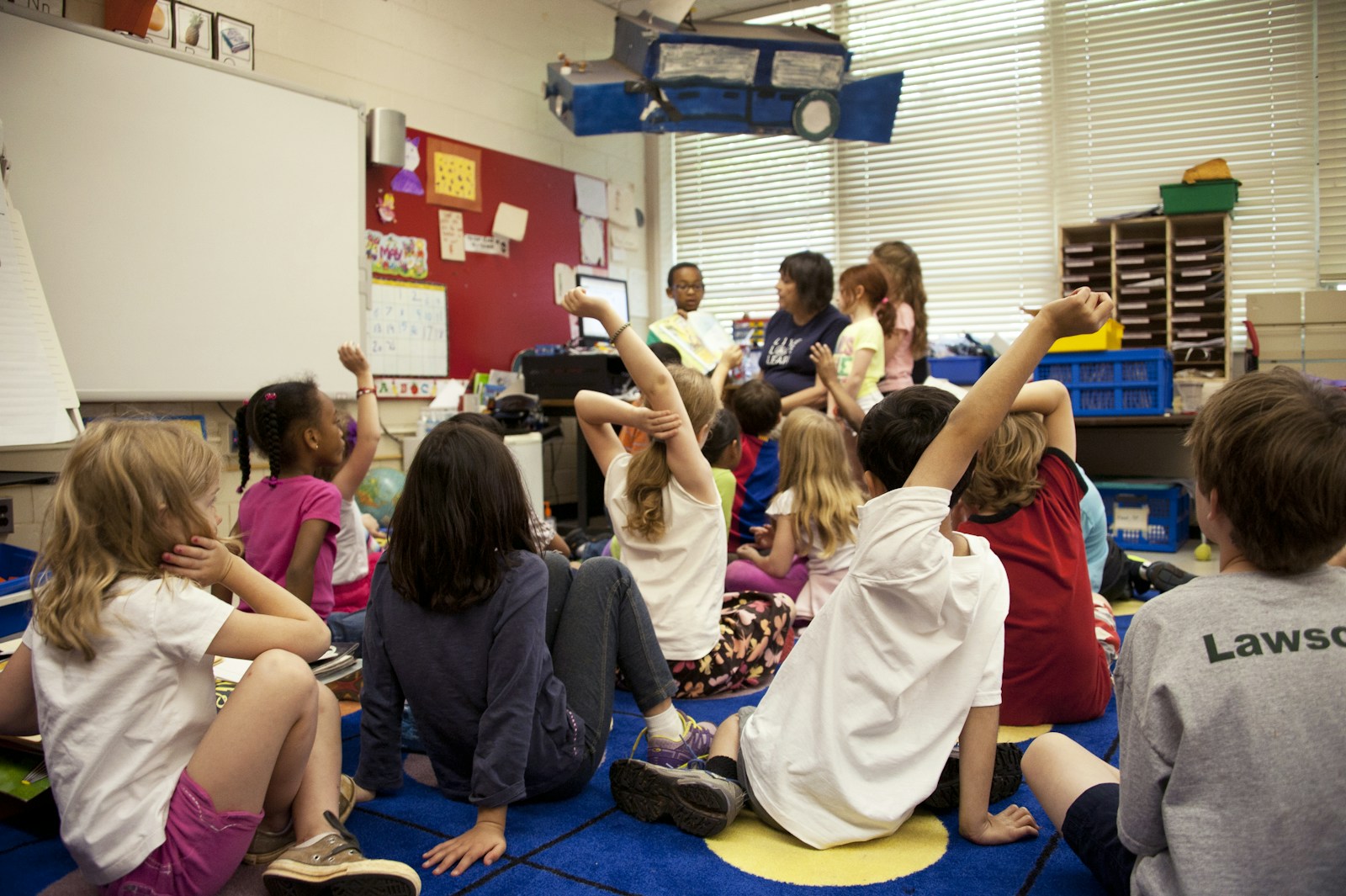
When resources are thin, your instructional choices matter even more. The good news: you don’t need pricey programs to improve literacy in low-resource classrooms. You need a clear sequence, consistent routines, and simple, repeatable tools. The five strategies below are grounded in research on how children learn to read and write, phonemic awareness, systematic phonics, oral language development, fluency practice, guided instruction, and daily writing. Each includes low-cost actions you can start tomorrow and practical metrics you can track with a notebook, clipboard, or phone. Use them to close gaps efficiently, and with confidence.
Why Literacy Gaps Persist In Low-Resource Settings
You’re not fighting a lack of potential: you’re fighting a lack of consistency, time, and materials aligned to how reading develops. In low-resource settings, students often get fragmented instruction, some phonics here, a story there, without the daily, cumulative practice that builds automaticity. Decodable texts are scarce, so beginners guess at words in complex leveled readers. Large classes limit feedback, so errors fossilize. And when assessments are irregular, you don’t catch small problems before they become big ones.
Three mechanisms keep gaps in place:
- Skill mismatch: Students are asked to read texts above their decoding level, which pushes them toward guessing rather than applying phonics.
- Practice deficit: Without repetition (in sounds, patterns, and connected text), accuracy never becomes fluency.
- Feedback lag: If you can’t quickly see what students can and can’t do, you can’t target your next lesson.
Your leverage points are simple: teach the right skills in the right order, increase opportunities to respond, and give immediate, specific feedback. The strategies that follow do exactly that, at near-zero cost.
Strategy 1: Build Phonemic Awareness And Systematic Phonics With Low-Cost Tools
Phonemic awareness (hearing and manipulating individual sounds) and phonics (linking sounds to letters) are the bedrock for beginners and for older students who never automated decoding. Research is clear: a brief daily dose of explicit, cumulative practice outperforms long, unfocused lessons.
Low-Cost Actions
- Use a 5–7 minute daily routine: segment words into phonemes, blend them back, and manipulate one sound (swap /m/ in “mat” for /s/ to make “sat”). Use fingers, bottle caps, or pebbles as counters.
- Teach letter–sound correspondences systematically. Create a scope-and-sequence on one page (e.g., m, s, t, a, p: then short vowels: then common digraphs and blends). Stick it to your wall.
- Make decodable texts by hand: sentence strips with target patterns (“Sam sits. Sam taps.”). Reuse in plastic sleeves.
- Build word cards for cumulative review. Shuffle yesterday’s and last week’s patterns so students must recall, not just memorize order.
- Model precise articulation. A small mirror helps students see mouth shape for tricky sounds.
What To Measure
- Letter–sound fluency: how many letter–sounds a student can name correctly in 1 minute.
- Phoneme segmentation: how many sounds a student can split in 1 minute (say “ship”, student says /sh/ /i/ /p/).
- Decoding accuracy on word lists that match your taught patterns. Track percentage correct weekly.
- Words read correctly per minute (WCPM) on short decodables aligned to your sequence.
Strategy 2: Strengthen Vocabulary And Oral Language Through Structured Talk
You build comprehension before, during, and after reading by growing vocabulary and syntax. In low-resource classrooms, you can do this with intentional talk: short teacher modeling, then lots of student voice with support.
Low-Cost Actions
- Frontload 3–5 tier-two words before a read-aloud. Give quick kid-friendly definitions, examples, and one non-example. Keep a visible “word wall” with simple sketches.
- Use sentence frames to elevate responses: “I predict that… because…,” “The character changed when…,” “A synonym for ___ is ___. “
- Run think-pair-share on purpose. Ask a prompt, give 20 seconds of quiet think time, then pairs talk, then a few share-outs. Rotate partners weekly to spread language models.
- Incorporate “partner retells.” After reading, Student A retells in 30–60 seconds, B adds missing details. Swap roles.
- Build morphology mini-lessons. Teach common prefixes/suffixes (re-, un-, -ful, -less). Make a class chart of word sums (hope + less = hopeless).
What To Measure
- Oral retell quality: listen for sequence (first/next/last), key details, and use of target vocabulary. Use a simple 1–4 rubric.
- Vocabulary uptake: tally how often students use target words correctly in speech or writing during the week.
- Response length and complexity: note if students move from one-word answers to complete sentences with conjunctions (and, because, but).
Strategy 3: Use Shared Reading, Repeated Reading, And Choral Reading To Boost Fluency
Fluency bridges word recognition and comprehension. You improve it by giving students multiple successful passes through accessible text with feedback. No fancy kits needed, just purposeful repetition.
Low-Cost Actions
- Choose short, high-utility texts: poems, decodable paragraphs, short dialogues. Ensure they’re slightly easier than students’ current stretch level.
- Do a quick teacher model: you read once with expression. Briefly mark phrasing with slashes or scoop lines.
- Choral read together. Then run echo reading in phrases. Finally, have students partner read, switching every sentence.
- Use repeated readings across days: Day 1 accuracy, Day 2 phrasing, Day 3 expression. Add a one-sentence performance (to a buddy group) at the end.
- Track timing with a phone or a sand timer. Celebrate growth, not speed races.
What To Measure
- Words correct per minute (WCPM) on the same passage across 2–3 days: aim for accuracy first (95%+), then rate.
- Prosody checklist: phrasing, attention to punctuation, expression. Quick 3-item rating works.
- Error patterns: mark substitutions or omissions to decide what phonics patterns to revisit.
Strategy 4: Leverage Guided Practice And Small-Group Instruction For Decoding And Comprehension
Whole-class time sets the stage, but small groups are where you close gaps. In low-resource classrooms, you can still rotate 10–15 minute groups with tight routines and minimal materials.
Low-Cost Actions
- Group by skill, not by label. Use your latest quick checks to create 2–4 fluid groups (e.g., short-vowel decoders, blends/digraphs, multisyllabic readers, comprehension focus).
- Run a simple lesson arc: review (1–2 minutes), teach/refresh (3–5), guided practice in words or a short text (5–7), quick record of progress (1). Keep a timer visible.
- Use decodable or controlled texts matched to each group’s needs. If you lack copies, project or handwrite one passage and have students track with fingers.
- Teach “fix-up” moves: cover part of the word, find the vowel, blend left to right: or for comprehension, stop every paragraph to name who/what, did what, why it matters.
- While you teach a group, set the rest of the class on independent, low-prep tasks: rereading familiar texts, word card practice, vocabulary sketch-notes.
What To Measure
- Group exit checks: one line to read, one question to answer, one word to spell. Mark correct/incorrect per student.
- Pattern mastery: percentage correct reading of the week’s phonics pattern across mixed lists.
- Text-based answers: look for evidence phrases (“because on page…,” “the author says…”) moving from literal to inferential over time.
Strategy 5: Write Daily To Accelerate Reading—From Sentence Combining To Short Compositions
Writing is the fastest, cheapest way to consolidate decoding, vocabulary, and comprehension. When students write every day, they practice phoneme–grapheme mapping, syntax, and meaning, all at once.
Low-Cost Actions
- Start with sentence combining. Give two short ideas and a connector: “The dog ran. It was raining. because.” Students create “The dog ran because it was raining.” Share a few and underline the connector.
- Dictation 2–3 times per week. Use sentences built from taught phonics patterns and target vocabulary. Students write, then check against your model and fix errors.
- Quick writes from prompts tied to reading: “In three sentences, explain why the character changed.” Model one strong sentence, then let them try.
- Build revision habits with colored pencils: circle one word to improve, add one detail, fix one punctuation mark.
- Publish simply: read to a partner, post on a wall, or compile a class booklet each month.
What To Measure
- Correct writing sequence (CWS): count words spelled correctly, in order, with correct capitalization and punctuation in a short timed write.
- Dictation accuracy: percentage of words spelled/encoded correctly from known patterns.
- Sentence quality: evidence of connectors (because, but, so) and varied sentence beginnings. Track how many students use at least one each week.
Conclusion
To improve literacy in low-resource classrooms, you don’t need more stuff, you need tight routines, explicit teaching, and fast feedback. Build sounds to letters, talk to grow meaning, reread to build fluency, teach in small groups to aim precisely, and write daily to lock it all in. Pick one strategy to start this week. Set a simple metric, chart it where students can see, and protect 10–15 minutes a day for that routine. The compounding effect over a month will surprise you, in the best way. And once you see momentum, layer in the next strategy. Small, consistent moves beat big, occasional ones every time.
No responses yet